CLIENT CASE STUDY · BUSINESS + LIFESTYLE ongoing day-to-day SUPPORT
Creating capacity for exceptional growth
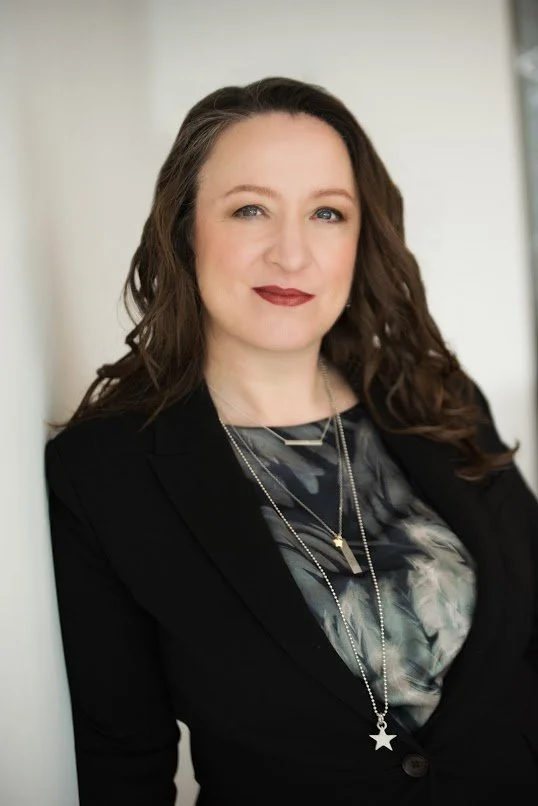
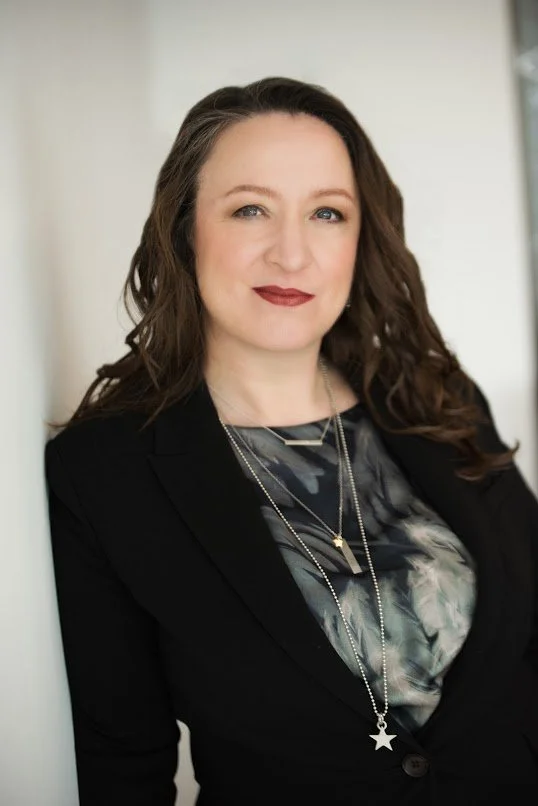
Client: Tiffany St James, Founder | Digital Strategist | Keynote Speaker | Leadership Psychology Coach | Chief AI Officer
Business: Transmute
Service(s): Day-to-day Business + Lifestyle support
Resources: Airtable · Slack · Remotely Onit! PossAbility Ambassador

The Challenge
Tiffany St James founded strategic digital consultancy Transmute to do the work she excels at: solving complex client problems and inventing new products and services.
But alongside that high-value work sat all the administration required to run and grow the business.
Tiffany was arranging meetings, managing her own diary and handling routine operational tasks herself. Each one required time and attention that could otherwise have gone towards client delivery, business development and the creative problem-solving she enjoyed most.
As Transmute grew, there was another challenge; the business needed processes capable of supporting increasingly complex client work.
One project made that particularly clear. Media company Viacom International Media Networks engaged Transmute to deliver fourteen training courses, requiring multiple trainers, meeting rooms and members of Viacom staff to be coordinated across numerous dates.
Tiffany knew there needed to be a more efficient way to manage it.
She just didn't know what that solution should be.
She wasn't looking for somebody who would simply wait for her to identify an administrative task and delegate it. Tiffany needed support from someone who understood the digital world she operated in, could recognise where her processes could work better and had the technical and operational expertise to design the solution as well as implement it.
The Support
Tiffany engaged Cydelle, then operating as Onit! Communications, initially for support with her diary.
That first piece of work quickly demonstrated that there was considerably more opportunity to improve the way Transmute operated.
We reviewed the processes behind the business and identified where smarter systems, automation and more intentional ways of working could reduce unnecessary administration, create consistency and make the business easier to operate as it grew.
Rather than simply transferring existing tasks from Tiffany to somebody else, we looked for opportunities to remove, streamline or redesign the work itself.
For the Viacom training programme, that meant turning a complicated scheduling exercise into a structured workflow.
Using Airtable, we created a process through which trainers could submit their availability using an online form. That information was automatically compiled, making it much easier to coordinate trainers with the relevant courses and available meeting rooms.
Elsewhere in the business, we identified opportunities Tiffany hadn't necessarily recognised as problems yet.
Transmute already had robust accounting processes, for example, but supplier invoices didn't have a standardised end-to-end workflow. We designed an automated process that captured incoming invoices, stored them appropriately and immediately notified Tiffany of the relevant payment terms.
As Tiffany put it:
“I didn't necessarily know I needed that, until Cydelle spotted the opportunity to save time.”
And the relationship expanded beyond systems and administration.
As our understanding of Tiffany, Transmute and its objectives deepened, Cydelle became a trusted sounding board for strategic decisions and also provided digital project management support for selected Transmute clients.
The role had evolved from supporting the work to helping strengthen the way the business itself worked.
The Transformation
Transmute developed a more intentional operational infrastructure around a business that was already doing exceptional work.
Routine administration no longer needed to consume the same proportion of Tiffany's attention. Repetitive processes could be automated. Complex projects could be supported by structured workflows. And opportunities for greater efficiency could be identified proactively rather than waiting until something became a problem.
That created capacity where it mattered.
Tiffany could focus more of her attention on winning new business, delivering client work, developing products and solving the complex problems that genuinely light her fire.
And the commercial picture evolved alongside it.
Transmute grew by 40% in both turnover and profit during the first two years of working with Onit!.
The significance wasn't simply that Tiffany had someone available to complete administrative work. She had operational support she trusted to take ownership.
Once something was handed over, she didn't need to repeatedly check its progress, explain every step or mentally retain responsibility for whether it would be completed properly.
In her words:
“If I hand over a piece of work to Cydelle I know it will be very well delivered, with no risk and no to-ing and fro-ing.”
And because the support combined digital expertise, process thinking, implementation and strategic understanding, it became increasingly difficult to describe as simply “admin”.
Tiffany joked that replacing Cydelle would probably require three different people.
What had begun as outsourced support had become an operational resource spanning systems, processes, project delivery and strategic thinking.
Before
✘ Tiffany's attention was being consumed by diary management and routine administration
✘ Administrative processes relied heavily on Tiffany personally completing or coordinating them
✘ Complex client projects could create substantial coordination challenges
✘ Trainer availability for a major 14-course programme required significant coordination
✘ Supplier invoices had no standardised processing workflow
✘ Tiffany needed to recognise a problem before deciding what to delegate
✘ Support initially centred around diary and administrative requirements
✘ Tiffany's expertise was split between running the business and doing the work only she could do
✘ Transmute was already successful but needed stronger operational support for growth.
After
✔ Operational support created greater capacity for client delivery, business development and the work Tiffany most enjoyed
✔ Repeatable systems and automation reduced unnecessary manual involvement
✔ Structured workflows made multi-part delivery easier to organise and manage
✔ An Airtable workflow collected and compiled availability so trainers, courses and meeting rooms could be matched efficiently
✔ An automated end-to-end process created greater consistency and visibility around supplier payments
✔ Proactive operational support identified opportunities to improve the business before Tiffany needed to prescribe the solution
✔ The relationship expanded into systems, strategic sounding-board support and digital project management
✔ Greater operational capacity allowed more attention to be directed towards growth, innovation and client work
✔ Turnover and profit grew by 40% during the first two years of the partnership.
The Client Perspective
“If Cydelle disappeared tomorrow I'd probably have to employ three people to do what she does.
It's her digital expertise, and knowledge of processes and the sequences of how things work, that are so useful. She's also a lot of fun to work with and very straight-talking. I really hadn't thought I'd be lucky enough to get all that in one person's skill set.
She's become vital to my business.”
POSSABILITIES BY DESIGN.
LIFE BY CHOICE.
POSSABILITIES BY DESIGN. LIFE BY CHOICE.
What Became PossAble
Transmute didn't need Tiffany to become better at administration.
It needed an operational structure that allowed her to spend more of her capacity on the work she was uniquely positioned to do.
That meant looking beyond the immediate task.
A diary could be managed. Or the way appointments were handled could be improved.
A complicated training programme could be manually coordinated. Or a workflow could be designed to make coordination considerably easier.
An invoice could be processed. Or the entire process could be redesigned so the same administrative friction didn't need to be solved repeatedly.
That approach created more than efficiency.
It gave Tiffany trusted operational capacity alongside her own expertise.
She could develop new business, invent products, solve client problems and deliver increasingly complex work while knowing the infrastructure surrounding that work was being strengthened too.
And Transmute's growth during those first two years reflected what was happening across the wider business: turnover increased by 40%, and profit increased by 40%.
Tiffany still runs Transmute today.
The business has continued beyond the period captured in this original Onit! Communications case study, but the principle demonstrated by the work remains remarkably current:
Growth becomes far more sustainable when the founder's expertise isn't also expected to carry every process required to support it.
Ready to strengthen what sits behind your expertise?
Your expertise may be the reason clients choose you.
But as your business grows, what surrounds that expertise matters too.
The systems. The processes. The client experience. The responsibilities sitting with you. The things that happen manually because they've always happened manually. And the operational decisions that quietly determine how much capacity you actually have to grow.
ALIGN™ gives us the space to understand that whole ecosystem before deciding what needs to change.
We'll look at how your business works today, how you want it to work in the future and where greater clarity, structure or support could create the biggest difference.
Because the goal isn't simply to make your business more efficient.
It's to design an ecosystem capable of supporting what you want to do with it next.