CLIENT CASE STUDY · BUSINESS ECOSYSTEM + SYSTEMS
The Radical Transformation of One Nation Experience
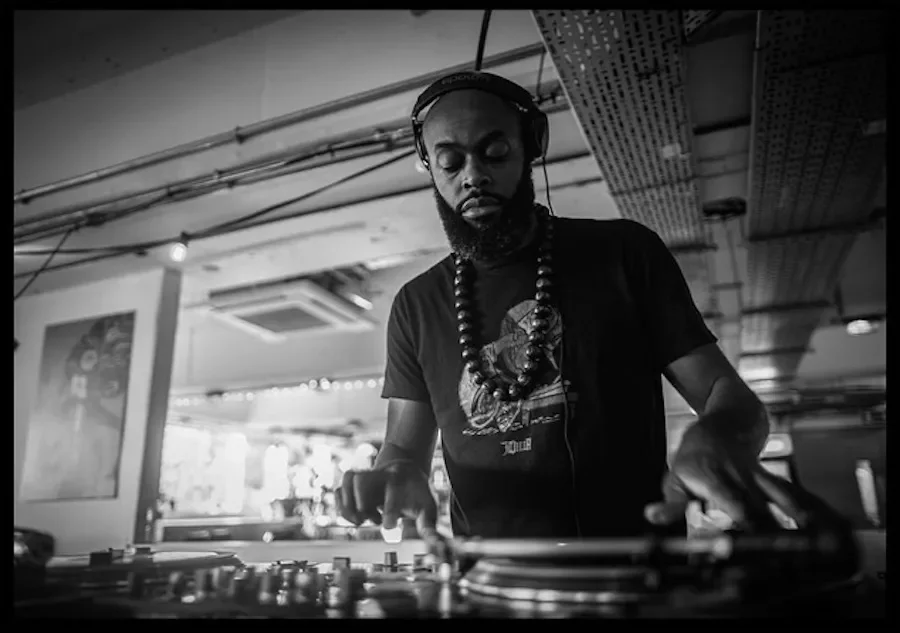
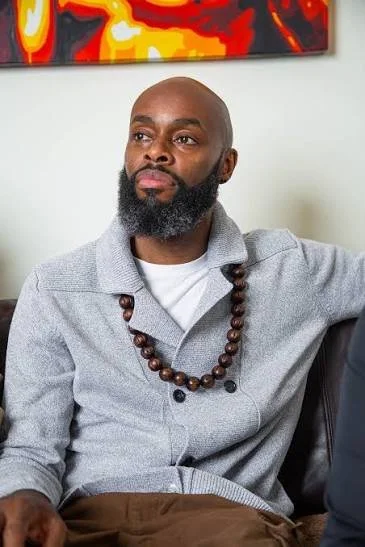
Client: Maurice Cunningham aka DJ Croc, Founder | DJ | Event Producer | Livestream, Sound + Lighting Specialist
Business: One Nation Experience
Service(s): Custom CRM architecture, build and implementation + Harmony day-to-day support
Resources: Dubsado · Airtable · Remotely Onit! PossAbility Ambassador
The Challenge
Maurice (also known professionally as DJ Croc) already had a clear sense that his business needed to evolve.
The business provides music, audio, equipment hire and live-streaming services for milestone events - from weddings and birthdays to funerals and home-going services. These are significant moments in people's lives, with a high expectation of professionalism, care and very little room for error.
But behind the scenes, Maurice was still largely running the business through pen and paper, WhatsApp and files stored locally on his laptop.
It worked for the business he had built so far. It couldn't support the business he wanted to build next.
Maurice wanted to raise the standard of the service, expand geographically, build a team and eventually be able to oversee the business without being tied to a particular desk, device or even country.
As he recognised himself, bringing people into the business would also require clear processes, defined responsibilities and documented ways of working. There needed to be a structure that other people could step into.
There was also practical risk in the existing setup. Important client and event information could live in a notebook or on one laptop, creating a significant point of dependency.
Maurice knew where he wanted the business to go.
The infrastructure to get it there didn't exist yet.
The Support
Maurice initially engaged Remotely Onit! for a custom CRM architecture and build, with Dubsado identified as the platform capable of doing much of the operational heavy lifting.
But very early in the process, something more fundamental became clear; the systems were ready to be built but, the brand wasn't ready for us to build them yet.
At the time, the business was operating as One Nation, but the brand itself was unclear and undefined. Its positioning, messaging and visual identity didn't yet reflect the business Maurice was describing to us - or the level of service and experience he wanted to create.
Building an extensive client journey at that stage would have meant making operational decisions around a business identity that was still taking shape. So we recommended that Maurice pause the systems project.
We introduced him to brand strategist Jae Gibbs and designer Kayleigh Hall, who Maurice subsequently engaged for their combined The Glow-up service to undertake the deeper brand, messaging, positioning, visual identity and website work the business needed.
That extensive process resulted in One Nation becoming One Nation Experience - a much clearer articulation of what Maurice was building, who it existed to serve and how he wanted the business to show up.
Remotely Onit! remained part of that wider process. We provided input around system requirements for Kayleigh to consider during the website planning stage, ensuring the eventual website and backend infrastructure would be able to work together rather than being designed as two separate pieces of the business.
Around four to six months later, with One Nation Experience defined and its new website bringing the evolved brand to life, Maurice returned to us. Now we could build.
We mapped his client experience in detail before configuring the technology, examining his different services, client needs, touch-points, communications, responsibilities and desired ways of working.
That process revealed something particularly important: One Nation Experience didn't have one universal client journey.
A couple planning their wedding months - or even years - ahead could be invited to complete an enquiry form and schedule a consultation at their convenience.
A family arranging the live stream of a loved one's funeral had completely different needs. Their timescale was shorter, the circumstances required greater sensitivity and initiating a personal call rather than asking them to navigate a booking process made far more sense.
Those distinctions informed the architecture. Rather than forcing every client through the same automated funnel, we built workflows around the context in which each service was being delivered and the experience those clients needed from One Nation Experience.
The resulting Dubsado ecosystem centralised client information, forms, contracts, workflows, communications and financial information, with documentation supporting Maurice's longer-term plans to delegate, recruit and train others within the business.
The system wasn't simply attached to the new website.
It was designed to continue the experience the brand and website had begun.
The Transformation
One Nation Experience moved from a business whose critical information and processes largely lived with Maurice, his notebook, WhatsApp and his laptop, to one with a centralised, cloud-based operational structure capable of supporting clients, collaborators and future team members.
Dubsado became the operational home for the client journey. Enquiries, forms, contracts, communications, workflows and financial information could be managed from one place, while reminders and defined processes reduced the possibility of important steps slipping through the cracks.
But the transformation wasn't simply about organisation.
For the first time, the way the business delivered its services had been thought through, mapped and documented in detail.
Different services could have different journeys. Automation could support consistency without removing the human interaction required for emotionally significant events. Processes could be refined as Maurice experienced them in practice. And documentation meant knowledge no longer needed to exist solely in his head before someone else could take responsibility for an area of the business.
That became particularly important as Maurice began adding DJs and later engaged Remotely Onit! for Harmony day-to-day and social support.
Having a PossAbility Ambassador supporting one part of the business gave him an early experience of what intentional delegation could make possible: that area could continue moving while he focused elsewhere.
And Maurice didn't merely tolerate the new systems once they were handed over. He embraced them.
By using Dubsado himself, he developed a deep understanding of how the system worked, continued identifying opportunities to refine it and became increasingly confident that other people could eventually step into defined roles around it.
The man who started with “a book, a pen and WhatsApp” reached the point of enthusiastically describing having “Dubsado in my pocket” and being able to oversee what was happening across the business from his phone.
Reader, we converted him!
Before
✘ Client and event information spread across notebooks, WhatsApp and Maurice's laptop
✘ Important information depended heavily on Maurice and the device or notebook he had with him
✘ Client journeys happened largely through Maurice's own knowledge and manual actions
✘ Different services were being managed without formally defined journeys
✘ Scaling meant potentially teaching new team members from knowledge held largely in Maurice's head
✘ The brand, website and backend infrastructure had yet to clearly communicate the level of service Maurice wanted to provide
✘ Maurice was central to most day-to-day activity
✘ Enquiries demanded real-time responses despite Maurice’s unconventional hours as a DJ
✘ Location independence and flexibility was an ambition without the infrastructure to support it.
After
✔ A centralised, cloud-based CRM brought client information, forms, contracts, workflows and communications together
✔ Business information became accessible through a system designed to support greater location flexibility
✔ Mapped workflows created defined journeys from initial enquiry through delivery and aftercare
✔ Each service could follow a process designed around its particular timescale, context and client needs
✔ Documented processes created a foundation for delegation, recruitment and training
✔ Brand, website and systems worked together to create a cohesive, professional experience
✔ Systems and documented processes created opportunities for others to take responsibility for defined areas
✔ Automated triaging and responses enabled prospective clients to feel catered to, even when Maurice was unavailable
✔ The business gained operational foundations designed to support greater flexibility and geographical independence.
The Client Perspective
POSSABILITIES BY DESIGN.
LIFE BY CHOICE.
POSSABILITIES BY DESIGN. LIFE BY CHOICE.
What Became PossAble
The CRM was one piece of a much bigger transformation.
Maurice set out wanting to raise the standard of his business, expand its reach and eventually build something that didn't require him to personally deliver or manage every element of it.
The work created foundations capable of supporting that ambition.
One Nation became One Nation Experience. Its brand became clearer. Its website reflected the level of service Maurice wanted the business to represent. Its client journeys became intentional and documented. Critical information moved into the cloud. Processes could be shared. Responsibilities could be delegated. And the business gained an operational structure capable of evolving alongside his ambitions.
Importantly, those systems haven't removed Maurice from One Nation Experience. They've simply created greater choice about where he needs and wants to be involved. That distinction matters even more now.
Several years later, Maurice's original ambition for location independence and greater flexibility hasn't disappeared. It's evolved.
He's now preparing to work with Remotely Onit! again through ALIGN™, this time looking beyond individual systems, to the wider One Nation Experience ecosystem: mapping the next five years, bringing the business up to speed with the life he wants to build, exploring greater location independence and flexibility, and considering what an on-the-ground UK team could look like.
What began as a conversation about replacing pen, paper and WhatsApp has become something much bigger:
designing a business capable of going where Maurice wants to take it.

Is your business ready for where you want to take it?
Your next chapter doesn't begin with choosing another tool, hiring another person or adding another automation.
It begins with understanding where you're going, how you want your business to work and what needs to be true for it to support you when you get there.
ALIGN™ is our founder-first ecosystem review. We look across your business, your goals, the way you work and the life you're building, to uncover what's already supporting that vision, what's creating friction and what needs to evolve next.
Because sometimes the right next step is implementation.
And sometimes, as Maurice discovered, the smartest thing you can do is make sure the foundations are ready first.